
Stop Hiring Task-Takers, Start Building Systems
Stop managing freelancers and start building an engine. Learn why task-based hiring keeps you trapped and how a software partnership breaks the bottleneck.
Series Navigation
View Parts
Table of Contents
Expand
You know you’ve hit this stage when your Slack notifications feel like a physical weight. You hire a freelancer to fix a broken spreadsheet or build a small automation, and instead of getting time back, you got a new job. Project Manager.
Every time you outsource a task, you’re still the one supplying the logic, the edge cases, the troubleshooting. You’re still the architect of every tiny fix. Welcome to the Freelancer Trap.
Hiring for “tasks” doesn’t solve the Complexity Wall. It just adds management overhead that keeps you stuck in the weeds. If you have to explain exactly how to build every solution, you haven’t actually offloaded anything.
To break the founder bottleneck, you have to stop hiring task-takers and start building systems. You need a partner who owns the outcome, not just the ticket.

The Freelancer Trap: Why Your Management Overhead is Killing You
When you hire a freelancer, you’re usually buying their hands, not their brain. They wait for a prompt, do the thing, and stop. Which quietly turns you into a full-time project manager, writing instructions all morning and checking whether they were followed all afternoon.
Cheap hourly help often becomes the most expensive way to scale. You pay for it in context switching, the mental cost of ping-ponging between high-level strategy and low-level troubleshooting. The real cost of a freelancer isn’t their rate. It’s the hours of your life it takes to keep them productive.
Actual scale needs a partner who gets your business goals without a hand-held walkthrough for every update. If you’re spending more time in Jira than in sales meetings, you’ve hit the ceiling of the task-taker model.
The Difference Between a Ticket and a Solution
A ticket is a request for a feature. A solution is a fix for a business pain. Work with task-takers and you’re stuck translating your business problems into technical requirements yourself.
When a process is failing, a task-taker waits for you to tell them which button to add. A partner looks at the failing process and asks why it exists at all. One closes a ticket to get paid. The other solves a problem so your business can grow.

The hard part of software isn’t writing code. It’s the architectural thinking that makes a system reliable. Define the goal instead of the steps and you reclaim your capacity to lead. That’s the core of our partnership model. We take the “how” off your plate entirely.
Here’s the shift in practice. The ticket says “add a status dropdown to this spreadsheet.” The solution says “automate lead transitions so nobody updates a status by hand.” The ticket says “fix the bug in this one-off script.” The solution says “build a custom API so data flows correctly between your CRM and billing software, every time.”
The Software Department Model: Ownership Over Execution
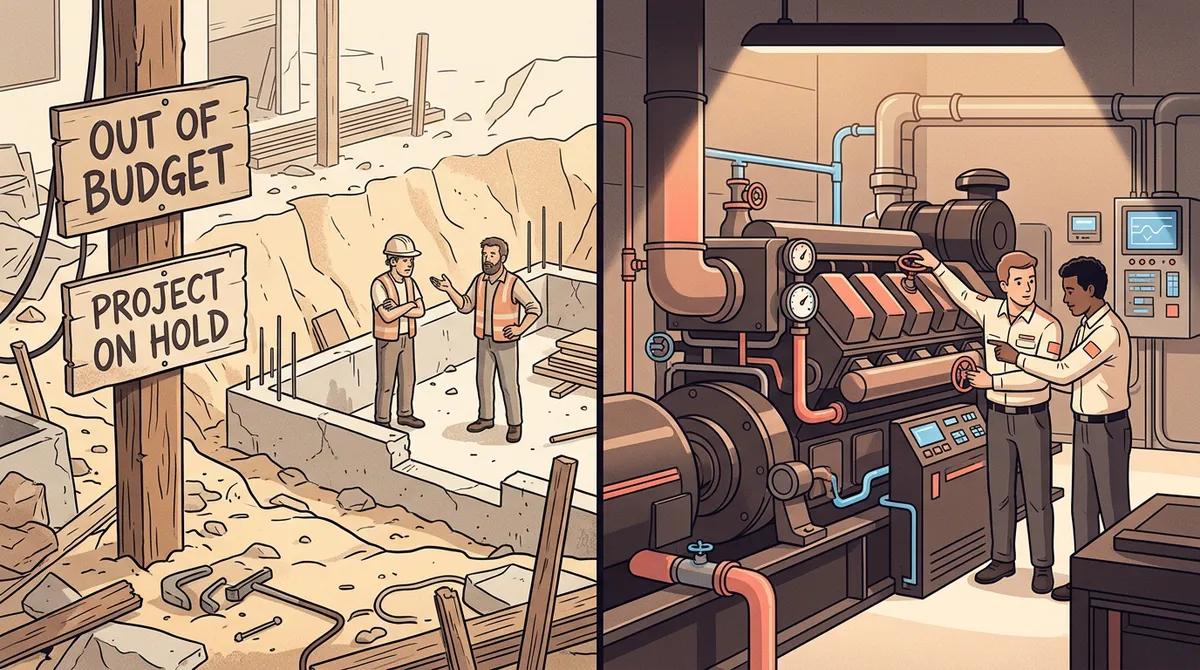
Most founders treat software like a construction project. But a growing business is a living organism. Our subscription model lets us work as your internal software department for a flat monthly fee.
That moves the focus from one-off projects to a continuous improvement cycle. The goal is to make your system so efficient it needs less manual intervention over time. Your software is licensed to you while the subscription is active, with clear buyout options if you ever want full ownership.
We chase the “why” before we touch a line of code. And often the “why” reveals you don’t need a new dashboard at all. You need an automated data pipeline that kills the manual reporting entirely.
Building Systems That Outlive Your Daily Input
Custom software should be the institutional memory of your company. Right now, your business rules probably live in Slack threads and the gut feeling of your longest-tenured employee. When those people leave, the logic walks out with them.
Systematic growth happens when you move that logic into code. Build custom tools and you create a permanent company brain, one that doesn’t get tired or forget an edge case. It turns your personal expertise into a scalable digital asset.
Our pricing page shows how the subscription model lines our incentives up with building stable, long-lived systems. You stop paying for “work” and start investing in an engine.
How to Transition Without Breaking the Business
Moving from founder-led chaos to a systemized operation feels like changing a tire while the car’s still rolling. The trick is to skip the “total overhaul” and go straight at your specific points of failure.

Here’s a 30-day version. First, run a “why” audit: for one week, write down every time an employee asks you for a decision. If the answer is always the same, that rule belongs in code. Second, isolate the data: find where your source of truth actually lives, and if it’s spread across three spreadsheets, unifying them is your first project. Third, define the win, and don’t aim for “better.” Aim for “no longer requires my approval.”
If you’ve got a specific one-off automation in mind, our estimate tool gauges the cost of a fixed-price engagement. For ongoing transformation, the subscription model is the better fit.
The Founder’s New Role: Visionary
Your job is to steer the ship, not shovel the coal. When you’re down in the engine room moving data by hand or double-checking a freelancer’s work, nobody’s at the helm. Reclaiming the hours you spend managing the fixers is the only way to reach the next stage.
Real scale arrives when your presence is no longer required for things to run well. Offload the technical ownership and you go from Chief Everything Officer to actual CEO. From reactive firefighting to proactive leadership.

Ready to stop being the most expensive part of your own maintenance crew? Then it’s time to change the model. You don’t need another contractor. You need a software department that understands your goals as well as you do. Contact us and let’s build the systems that let you lead again.
Related Topics
About Ryse Software
We are a software engineering partner that makes it easy for teams to design, build, and evolve custom software, from early experiments to long-term systems.
If this article was useful, and you’re thinking about software in your own business, we’re happy to talk through options and tradeoffs.
A clear discussion, no pressure and no pitch.