Stop Fighting Your Software: When to Build Custom Internal Tools
Off-the-shelf software often forces you to change your workflow. Learn when to stop compromising and build custom CRMs, ERPs, and dashboards.
Table of Contents
Expand
Most small businesses don’t need a custom CRM or a complex ERP. If your generic software works, keep it. But plenty of founders wait way too long to leave off-the-shelf tools behind, because the upfront cost of custom development scares them.
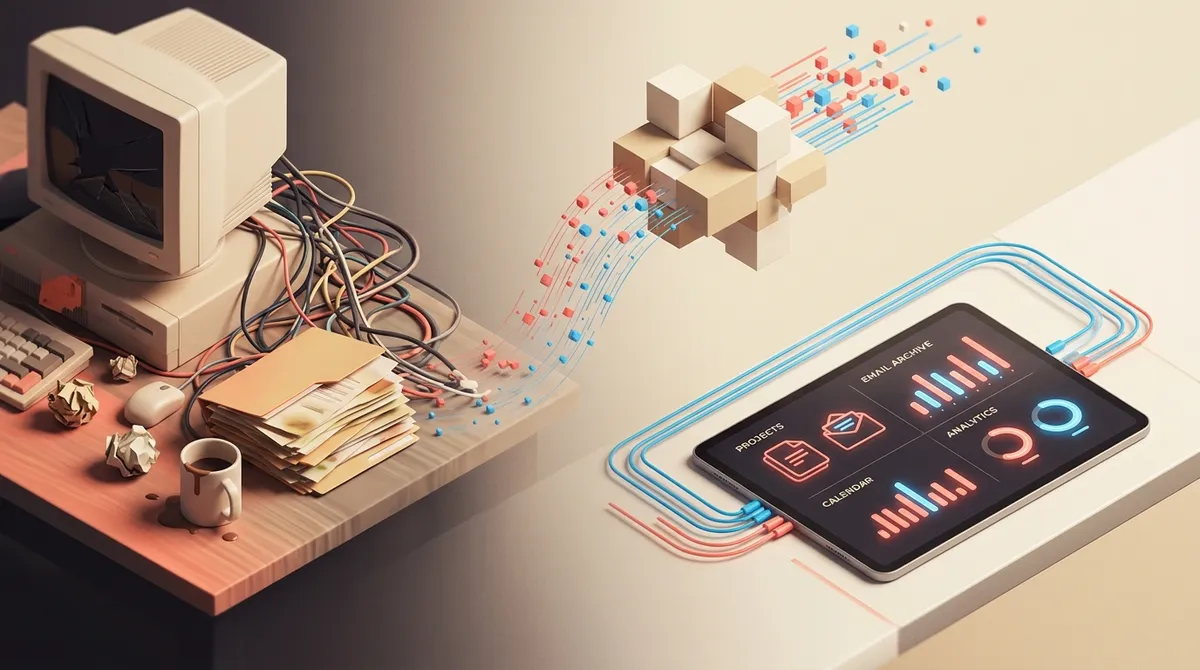
And while you wait, you pay a tax. You pay it every time someone hand-moves data between five apps to finish one task. You pay it every time your team spends more energy fighting the software than serving customers. It just doesn’t show up on an invoice.

Here’s the real signal: when your software forces you to change the processes that give you an edge, you’ve outgrown your stack. You don’t have to rip out every tool you own. You have to fix the gaps between them.
Whether it’s a custom operations dashboard or a niche intake system, the goal is the same. Kill the manual data shuffle. If you’re drowning in spreadsheets, it’s worth running the math on building your own “connective tissue.” Our project estimate tool can ballpark the scope for you.
The SaaS Ceiling: Why ‘Good Enough’ Is Costing You
Generic software is built for the average business. If your operations aren’t average, “good enough” eventually turns into a bottleneck. You hit the SaaS ceiling the day you spend more time managing your tools than producing anything with them.
That ceiling breeds manual workarounds. Your lead tool doesn’t talk to your fulfillment system, so a person becomes the bridge. It’s a silent profit killer that adds human error and guarantees your data is always a little out of sync.
Generic CRMs tend to break on the same thing: they can’t hold your actual business logic. Your sales process needs custom quotes or a niche intake step, and the standard tool shoves it into a “notes” field or an external doc. The moment a spreadsheet becomes your real database, it becomes a liability.
The Efficiency Tax
The efficiency tax is the measurable cost of fragmented systems. Picture one employee spending 30 minutes a day moving data between disconnected apps. Over a year, that’s more than 120 hours gone. For one person.
It’s also why your best people leave. They signed up to solve problems, not to spend half the day as a human bridge between two broken apps.
And once the system feels broken, people quietly stop trusting the data. They start keeping their own “shadow” spreadsheets, and now you have no single truth at all. Our pricing page explains how the ongoing partnership model clears these hurdles through steady, iterative work.
The Build vs. Buy Framework
Buying a subscription or building custom software isn’t all-or-nothing. Most smart businesses do both.
When to Buy
Buy for the commodity stuff every business uses. There’s no reason to build a custom email client or accounting suite when Gmail and QuickBooks already nailed it. If a process is identical for you and the dry cleaner down the street, buy the off-the-shelf version and move on.
When to Build
Build for your “secret sauce.” The specific operations and customer experiences that make you better than the competition. If no existing tool fits your workflow without making you compromise that edge, you’ve got a custom software problem.
Custom software also puts you back in control. You’re not at the mercy of a vendor hiking prices or killing a feature you depend on. Our partnership model gives you a dedicated internal software department without the headache of hiring a full-time dev team.
Custom CRMs: Beyond Contact Management
A generic CRM is often just a digital Rolodex. Push past its limits and you go from storing contacts to running an automated sales engine.
A custom engine doesn’t just hold data. It triggers the next step. Your salesperson doesn’t have to remember the follow-up, because the system already sent it.
Integrating the Full Lifecycle
Here’s where off-the-shelf CRMs fall down: they stop the second the deal is won. In a custom setup, the CRM is the start of your operation. Data flows straight into production with nobody re-keying it, and the friction between sales and fulfillment just evaporates.
ERPs and Operations Dashboards
Most SMBs don’t need a million-dollar ERP. They need a single source of truth. One central place where inventory, labor, and project data live together instead of scattered across silos.
An operations dashboard pulls all of that into one view. It automates the hand-off between departments, so production gets exact specs the instant a deal closes.
The Power of the Dashboard
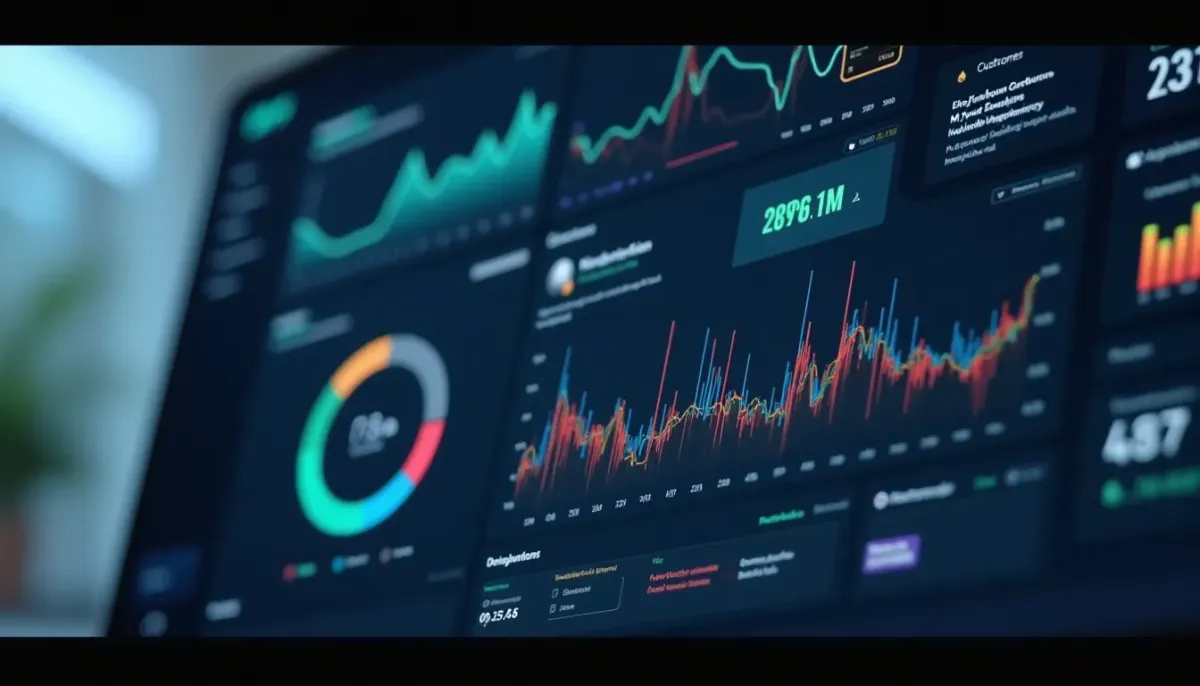
Generic software loves to clutter your screen with vanity metrics. A custom dashboard cuts the noise and shows the handful of numbers that actually move your bottom line.
That clarity kills the Friday afternoon report scramble. No more managers pulling data from six apps to hand-build a summary. With a custom tool, the report is already live.
The Ryse Approach: Software as a Partnership
The old “project” model is just wrong for internal tools. You pay a big fee upfront, the developer ships the code, and then they’re gone. But your business isn’t frozen in place. Your processes shift, and your team grows.

So we run Ryse as your internal software department. A partnership where we act like members of your team, building iteratively and hitting your worst pain points first.
Predictable Pricing
Traditional billing hands you a bad choice: hourly rates that reward slowness, or fixed bids that spiral into feature-creep traps. Our subscription model lines our incentives up with your long-term growth instead.
You pay a predictable monthly fee for a dedicated workstream. Your software stays licensed and maintained for as long as we’re partners, with the technical stewardship it takes to keep everything humming.
How to Get Started (Even if You Aren’t ‘Techy’)
You don’t need to be an engineer to build custom tools. You need to be an expert in how your business runs. Most of the best internal tools start as a conversation about one specific frustration.
1. Audit Your ‘Frankenstein’ System
Trace a customer from first lead to final invoice. Mark every spot where a human hand-carries information from one screen to another. Those friction points are the blueprint for your future software.
2. Identify the One Task Everyone Hates
Ask your team a simple question: “If you could snap your fingers and delete one repetitive task, what goes?” Usually it’s something soul-crushing, like reconciling inventory counts. Solve that one thing and the ROI is immediate.
3. Map Out a Solution
Once you know the bottleneck, you don’t need to know the tech stack. You just need the input and the output. When you contact us, we walk your process step by step and find the missing connective tissue.
Stop Paying the Tax
Building custom internal tools is really a math decision, weighed against the value of your team’s time. Stop paying the efficiency tax and you free up people to work on strategy and customer experience instead.
None of this has to happen overnight. If you’re ready to stop fighting your tools, run our project estimate tool to ballpark the scope, or contact us to talk through the partnership model.

Related Topics
About Ryse Software
We are a software engineering partner that makes it easy for teams to design, build, and evolve custom software, from early experiments to long-term systems.
If this article was useful, and you’re thinking about software in your own business, we’re happy to talk through options and tradeoffs.
A clear discussion, no pressure and no pitch.